
close
Choose Your Site
Global
Social Media


Views: 0 Author: Site Editor Publish Time: 2026-06-29 Origin: Site


Engineers constantly face severe challenges in harsh environments. Traditional structural materials like steel, aluminum, and wood often fail prematurely under extreme conditions. They degrade rapidly when exposed to corrosive chemicals, rogue electrical currents, or strict weight limits. Metal oxidation and wood rot force maintenance teams into endless repair cycles. These constant material failures cause unplanned downtime and introduce serious safety hazards into the workplace. Facilities desperately need structural alternatives to break this costly cycle of decay and replacement.
Pultruded fiberglass reinforced plastic (FRP) offers a reliable and proven solution. It shifts the operational focus away from constant component replacements toward long-term structural stability. This article provides technical buyers, project managers, and engineers a clear framework for evaluating FRP composites. You will learn exactly where and why to specify these advanced materials across demanding industrial and outdoor applications.
Fiberglass flat bars replace steel and aluminum in applications demanding high strength-to-weight ratios, dielectric safety, and absolute corrosion resistance.
Primary industrial use cases include chemical processing catwalks, electrical insulation supports, and wastewater treatment infrastructure.
Outdoor applications rely on the material's resistance to moisture and salt, though UV protective coatings are necessary for maximum lifespan.
Evaluating FRP requires analyzing specific resin systems (e.g., polyester vs. vinyl ester) to match the chemical and thermal realities of the deployment environment.
Traditional metals harbor hidden flaws in harsh industrial settings. Carbon steel requires constant rust remediation and protective painting. Aluminum struggles heavily in alkaline zones and loses its structural integrity fast. Furthermore, both metals conduct electricity. This physical trait introduces severe grounding risks and arc flash dangers near power generation equipment. Maintenance crews spend countless hours patching, painting, and replacing these degrading supports. You lose valuable production time whenever a steel support beam rusts through and demands immediate replacement.
What does a successful material switch look like? First, it delivers zero-maintenance longevity. Second, it ensures strict compliance with site safety standards. Third, it drastically reduces structural deadweight. When you swap heavy steel for a fiberglass flat bar, you achieve these exact outcomes. You eliminate the endless cycle of structural painting and corrosion control. FRP components arrive pre-colored and inherently resistant to chemical attack. They allow maintenance teams to focus on critical machinery rather than structural upkeep. Engineers define success by how easily you can install the material and how long you can safely ignore it afterward.
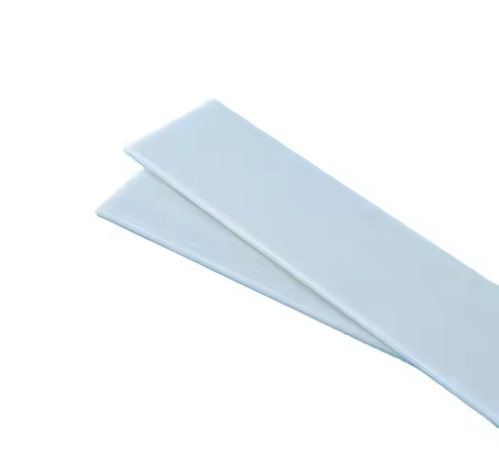

Chemical plants and wastewater treatment facilities destroy traditional metals. Engineers heavily specify composite materials for grating supports, tank structural framing, and baffle walls in these sectors. Operations rely on FRP because it actively resists continuous exposure to harsh acids and heavy alkalis. You can submerge these components in aggressive chemical baths without triggering structural degradation. They never rust, even in 100% humidity environments. This makes them the standard choice for walkway supports hovering over corrosive liquid vats.
Electricity naturally seeks the path of least resistance. Metal frames create dangerous pathways. Power generation plants use non-conductive materials for busbar supports, switchgear mounting, and non-conductive tool framing. FRP leverages high dielectric properties to keep workers safe. You eliminate complex grounding requirements entirely when you use non-conductive structural supports. These profiles prevent arc flash hazards, drastically improving worker safety in high-voltage zones. They isolate live currents and protect sensitive diagnostic equipment from electrical interference.
Heavy moving parts slow down assembly lines. Plant managers utilize FRP profiles for custom machine guards, conveyor side guides, and structural cross-bracing. Composites reduce heavy moving mass significantly. When you lower the weight of a moving component, you decrease the strain on motors and actuators. Furthermore, composite materials naturally dampen operational vibrations. They absorb microscopic shocks better than rigid steel, leading to quieter factory floors and extended machinery lifespans.
Saltwater represents one of the most destructive natural forces on earth. Marine engineers trust composites for dock reinforcements, seawall structural supports, and offshore rig catwalks. Fiberglass flat bars remain completely impervious to saltwater degradation. Unlike timber, they do not attract marine borer insects. You can install them in tidal splash zones where structural elements experience alternating cycles of wetness and oxygen exposure. They outlast treated wood and galvanized steel by decades in these harsh coastal environments.
Public parks and civil infrastructure projects demand safe, long-lasting materials. Contractors install them as pedestrian bridge decking supports, boardwalk framing, and corrosive-soil retaining walls. They maintain absolute structural integrity in damp, fluctuating climates. Wood rots rapidly in shady, damp ravines. Metal oxidizes quickly in wet soil. Composites ignore these environmental pressures. They provide a reliable foundation for walkways traversing wetlands, nature preserves, and corrosive marsh environments.
Engineers rarely design systems using only one shape. They combine multiple profiles to build comprehensive frameworks. They frequently engineer flat profiles alongside fiberglass rod sticks and larger structural shapes like angles and channels. This complementary approach allows fabricators to create complete, metal-free framing systems. You can construct entire multi-level platforms without using a single piece of steel. This unified material strategy guarantees that no hidden weak points exist in the final structure.
You must select the correct resin matrix to ensure long-term success. The internal glass fibers provide strength, but the surrounding resin dictates chemical survival. Isophthalic polyester serves as the standard industrial grade. It provides excellent general corrosion resistance for mostly dry or mildly acidic environments. Vinyl ester represents the premium grade. You specify vinyl ester for severe chemical exposure and elevated thermal environments. It withstands highly concentrated acids and aggressive solvents.
Industrial Resin System Comparison Chart
Resin System | Corrosion Resistance | Typical Thermal Limit | Ideal Deployment Scenario |
|---|---|---|---|
Isophthalic Polyester | High | 150°F (65°C) | Wastewater plants, splash zones, general industrial framing. |
Vinyl Ester | Maximum | 210°F (99°C) | Chemical processing tanks, acid submersion, high-heat zones. |
The manufacturing process determines how the material handles weight. The pultrusion process aligns continuous glass rovings linearly along the profile. This specific manufacturing method dictates longitudinal strength. The finished product carries massive loads along its length but handles less stress across its width. You must align load requirements with the bar's specific orientation. Always consult load-deflection tables to ensure the profile matches your specific span and weight demands.
Industrial materials must pass rigorous safety checks. You must verify essential compliance metrics before procurement. Always check for ASTM testing metrics validating the material's physical properties. Require OSHA-compliant load ratings for any pedestrian walkways or working platforms. For indoor or enclosed applications, demand Class 1 flame spread ratings tested under ASTM E84. These certifications protect your workforce and ensure facility insurance compliance.
Sunlight aggressively attacks bare composites over time. We must address the reality that raw FRP will "bloom" under prolonged UV exposure. Blooming means the surface resin degrades, exposing the bare glass fibers beneath. These exposed fibers trap dirt and irritate bare hands. You can easily solve this problem during procurement. Always specify synthetic surfacing veils and factory-applied polyurethane UV coatings. These protective layers block ultraviolet rays and keep the surface smooth for decades.
Metals behave the same in every direction. Composites do not. We call this anisotropic strength. They feature immense strength along their length (longitudinal) but are noticeably weaker across their width (transverse). You cannot treat them exactly like steel beams. Hardware fastening and point-loads must be engineered accordingly. If you over-tighten a bolt without proper washers, you risk crushing the transverse fibers. You must distribute heavy point loads using broad metal washers or specialized saddles.
Installation requires distinct techniques. You cannot cut composites using standard wood blades without ruining the tools and the material. Fabrication demands specific approaches:
Use proper cutting tools: Cutting and drilling strictly require carbide or diamond-tipped tools to slice through the dense glass fibers cleanly.
Manage the dust: Always wear proper PPE, including respirators and long sleeves, to protect against fine fiberglass dust generated during fabrication.
Seal all modifications: You must seal all cut edges and drilled holes with an appropriate liquid resin. This critical step prevents internal moisture ingress and stops chemical wicking.
Control fastening torque: Use torque wrenches to avoid crushing the composite matrix during final assembly.
Procurement teams must decide between off-the-shelf and custom solutions. Standard off-the-shelf dimensions work perfectly for 80% of general industrial applications. They offer faster lead times and predictable performance data. However, highly specialized environments demand custom runs. If your project involves extreme temperatures, unique hazardous chemicals, or specific color-coding mandates, you require custom resin formulations. Work closely with manufacturers to determine if a standard profile meets your safety thresholds.
Not all pultrusion manufacturers deliver the same quality. You must evaluate potential vendors rigorously. Keep these common mistakes in mind: choosing a vendor solely on price often leads to receiving poorly cured, weak profiles. Use this checklist to vet suppliers:
Do they provide comprehensive load and deflection data sheets for their specific profiles?
Can they accurately trace raw material lots for critical infrastructure projects?
Do they perform standard ASTM testing on every batch they extrude?
Do they offer pre-fabrication services (cutting and drilling) to reduce your on-site labor and mitigate toxic dust exposure at your facility?
Do not wait for another catastrophic structural failure. Prompt your maintenance leadership to audit their current logs today. Look for any recurring corrosion-related failures across your facility. Identify the top three zones where you constantly replace steel or wood. Use this specific data as a baseline for an initial FRP pilot project. Testing composites in your worst environments will rapidly prove their operational superiority.
Switching structural materials requires careful engineering consideration. However, the data strongly supports moving away from traditional metals in harsh zones. Remember these core takeaways as you plan your next infrastructure upgrade:
FRP profiles are not a universal replacement for all steel, but they stand as the scientifically superior choice for corrosive, electrical, and weight-sensitive environments.
Understanding the difference between isophthalic and vinyl ester resins prevents premature chemical degradation.
Proper fabrication techniques, especially edge sealing and proper fastening, ensure the structure lasts its intended lifecycle.
Combining different profiles, including rods and channels, creates comprehensive, zero-maintenance framing networks.
Take action on your most problematic facility zones today. Access a technical specification sheet, download updated load tables, or contact an engineering team for a project-specific material consultation. Stop repairing the same rusted beams and start building permanent solutions.
A: Yes, but they behave differently under load. FRP matches or exceeds steel's tensile strength, but it features much lower stiffness. Engineers must account for greater deflection limits. You cannot swap profiles one-to-one based on physical size alone. Always consult specific manufacturer load tables to match your span requirements.
A: You absolutely cannot weld composite materials. Instead, you join sections using high-strength structural adhesives paired with stainless steel bolting. This dual-method approach ensures maximum joint integrity. We always advise sealing all newly drilled holes with resin to prevent moisture from wicking into the exposed glass fibers.
A: Standard continuous operating temperatures range between 150°F and 210°F. The exact limit depends entirely on the resin matrix you specify. Isophthalic polyester safely handles up to 150°F. Vinyl ester upgrades this thermal capacity closer to 210°F, making it mandatory for high-heat environments.
A: They present a complex environmental profile. End-of-life recycling remains highly challenging for thermoset plastics. However, their extreme longevity offsets this drawback. You replace FRP far less frequently than wood or metal. This dramatically reduces the massive carbon footprint associated with constant material manufacturing and transportation.
