
close
Choose Your Site
Global
Social Media


Views: 0 Author: Site Editor Publish Time: 2025-10-30 Origin: Site


Modern industries rely heavily on safe and reliable electrical systems, whether in residential buildings, commercial complexes, or large-scale industrial facilities. Electrical insulation and safety are fundamental to preventing accidents, improving performance, and ensuring long-term durability of electrical networks. Among the many materials developed for these purposes, fiberglass rods have emerged as a superior choice. They offer a rare combination of strength, light weight, and excellent non-conductive properties that make them indispensable in today’s electrical and safety applications.
This article explores the properties of fiberglass rods, why they outperform many traditional materials, and how they are being widely applied in electrical insulation and safety solutions.
Fiberglass rods are composite materials made from fine glass fibers embedded in a resin matrix. This construction results in a material that is incredibly strong yet lightweight, resistant to corrosion, and non-conductive to both electricity and heat. These features make fiberglass rods distinct from traditional construction and insulation materials like wood, metal, or even plastics.
The rods can be produced in different shapes, diameters, and lengths, depending on the application. For electrical uses, they are often engineered to withstand high voltages, temperature variations, and exposure to environmental stressors such as moisture or chemicals.
Electrical insulation plays a vital role in keeping systems safe and efficient. When electricity flows through conductors such as copper or aluminum, insulation ensures that the current stays within the designated path. Without insulation, leakage of current could occur, leading to short circuits, energy losses, fires, or even life-threatening electric shocks.
In addition to protecting people, insulation also protects the equipment itself. Properly insulated systems run more reliably, last longer, and require less maintenance. Materials used for insulation must therefore combine safety with durability, and fiberglass rods deliver on both fronts.
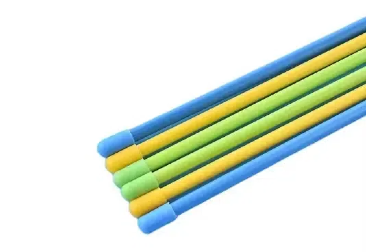
The most significant advantage of fiberglass rods in electrical applications is their non-conductive nature. Unlike steel or aluminum, which readily conduct electricity, fiberglass is an insulator by design. This property ensures that fiberglass rods can be safely used in areas where accidental conduction could create dangerous situations.
For example, fiberglass rods are often used in utility poles and crossarms. Since these components must support live wires, using a non-conductive material reduces the risk of current leakage and accidental electrocution.
Similarly, in power distribution systems, fiberglass rods act as insulator supports or spacers, maintaining safe distances between energized components. Their ability to withstand high voltages without conducting makes them critical to the overall safety of electrical networks.
Another factor that sets fiberglass rods apart is their durability in harsh environmental conditions. Many electrical systems are installed outdoors, exposed to rain, humidity, UV rays, and pollution. Traditional materials like wood can rot, while metals corrode or rust over time.
Fiberglass rods, however, resist moisture, chemicals, and temperature fluctuations. This makes them ideal for long-term use in electrical systems where reliability is essential. Whether in coastal regions with salty air or industrial zones with chemical exposure, fiberglass rods maintain their structural and insulating properties far longer than alternatives.
Heat is a common byproduct of electrical systems, especially in high-voltage or high-current applications. Insulating materials must be able to withstand elevated temperatures without losing their effectiveness. Fiberglass rods excel in this area, offering impressive thermal resistance compared to many plastics or organic materials.
They can endure continuous exposure to heat while maintaining their mechanical strength and insulation properties. This makes them suitable for use near transformers, switchgear, or engine compartments where both electrical and thermal insulation are required.
In addition to being non-conductive, fiberglass rods provide remarkable strength while remaining lightweight. This is particularly valuable in applications like overhead electrical distribution systems. Utility companies prefer materials that are easy to transport and install but still strong enough to bear significant loads.
Fiberglass rods meet this need perfectly. They are easier to handle than steel, require less heavy equipment during installation, and still provide reliable structural performance. Their lightweight design also reduces stress on existing structures, enhancing overall system stability.
The versatility of fiberglass rods has led to their adoption in a wide range of electrical and safety applications. Some of the most common uses include:
Fiberglass rods are increasingly replacing wood and steel in utility poles and crossarms. They provide superior insulation, resist rot and corrosion, and require less maintenance. Their non-conductive nature makes them safer for workers handling high-voltage lines.
In power distribution networks, fiberglass rods serve as supports and spacers to maintain safe distances between live conductors. Their strength and dielectric properties make them an ideal material for these critical safety components.
Fiberglass rods are often used in cable trays and conduits. They provide insulation and mechanical support while protecting cables from physical damage and environmental exposure.
Because fiberglass does not conduct electricity, it is widely used in safety tools such as hot sticks, ladders, and scaffolding for electrical workers. These tools allow technicians to work safely near high-voltage lines without the risk of electrocution.
Fiberglass rods are also used in the insulation of automotive engine compartments and heavy machinery. They not only resist heat but also prevent electrical conduction, ensuring safe operation in demanding environments.
Fiberglass rods provide several advantages over traditional materials commonly used in electrical insulation and safety applications:
Compared to Wood: Wood can absorb moisture, leading to rot and decreased insulation properties. Fiberglass is impervious to moisture and maintains insulation in wet conditions.
Compared to Steel: Steel is strong but conductive and prone to corrosion. Fiberglass offers non-conductivity and corrosion resistance, with adequate strength for most applications.
Compared to Plastics: Many plastics provide insulation but lack the durability, heat resistance, and structural strength of fiberglass rods.
This balance of properties explains why fiberglass rods are increasingly the material of choice across the electrical sector.
Although fiberglass rods may have a higher initial cost than some traditional materials, they prove more cost-effective over time. Their long service life, low maintenance requirements, and reliability reduce operational costs for utility companies and industries. Moreover, their lightweight design reduces transportation and labor costs, making them economical in both the short and long term.
In modern industries, safety is a non-negotiable priority. Fiberglass rods directly contribute to meeting and exceeding safety standards by minimizing the risk of electrical accidents. Their non-conductive, heat-resistant, and durable properties provide peace of mind for both workers and end users. By reducing the likelihood of system failures and accidents, fiberglass rods play a crucial role in safeguarding human lives and infrastructure investments.
The demand for fiberglass rods in electrical insulation and safety applications is expected to grow as industries continue to seek safer, more sustainable, and cost-effective materials. Advances in composite manufacturing are making fiberglass rods even stronger, lighter, and more versatile. As smart grids, renewable energy systems, and modern infrastructure expand, the role of fiberglass rods will only become more prominent.
Fiberglass rods have proven to be an exceptional material for electrical insulation and safety applications. Their non-conductive properties, durability in harsh environments, resistance to heat, and lightweight strength give them clear advantages over traditional materials like wood, steel, and plastics. From utility poles and insulators to safety tools and machinery insulation, fiberglass rods are playing a vital role in creating safer and more reliable electrical systems.
As industries move toward higher safety standards and more sustainable materials, fiberglass rods are set to remain at the forefront of innovation. Their contribution to preventing accidents, lowering costs, and extending the life of electrical infrastructure makes them an indispensable material in the modern world.
