
close
Choose Your Site
Global
Social Media


Views: 0 Author: Site Editor Publish Time: 2026-06-18 Origin: Site


Procuring structural components carries incredibly high stakes for your business. Sourcing failures in composite materials inevitably lead to severe project delays. They also create massive structural liabilities down the line. B2B procurement teams face immense pressure during supplier selection. Making a poor choice ruins project timelines and damages your company reputation. The pultrusion process itself remains highly complex. It involves precise resin baths, heated dies, and continuous pulling mechanisms. Vetting a manufacturer goes far beyond simply comparing basic price sheets. You must look deeply into their specific operational workflows. This article provides a definitive, engineering-aligned framework. Procurement professionals need this exact structure. We will help you evaluate and select a reliable long-term manufacturing partner. You will learn exactly how to assess technical capabilities. You will also discover how to spot critical red flags and structure a bulletproof RFQ.
A verifiable quality control process—specifically regarding resin-to-glass ratios and dimensional tolerances—is the baseline for any reliable manufacturer.
Evaluating a Fiberglass Flat Bar Supplier requires scrutinizing their testing certifications (e.g., ASTM standards) and batch traceability.
A structured Request for Quote (RFQ) and sample testing phase is critical to mitigating supply chain risk before committing to high-volume orders.
Every industrial project relies on predictable material behavior. You simply cannot afford unexpected structural failures. Substandard pultruded components introduce immense risk into your assembly line. We see these failures frequently in large-scale infrastructure projects.
Pultrusion requires steady pulling speeds and consistent die temperatures. Inconsistent manufacturing processes result in variable tensile strength. They also cause severe dimensional inaccuracies. A basic Fiberglass Flat Bar might vary in thickness by just a few millimeters. This tiny variance quickly leads to massive assembly issues. Your field teams will struggle to fit parts together. Forced fittings create stress concentrations. These stress points eventually cause premature mechanical failure under load.
Subpar resin matrices present another hidden danger. Some manufacturers use cheap polyester fillers to reduce costs. Others skip adding adequate UV inhibitors. These shortcuts compromise long-term corrosion resistance. Without proper UV protection, the ester bonds break down quickly in sunlight. The outer layer flakes off, exposing the bare glass fibers. Exposed fibers absorb moisture. This moisture weakens the internal composite structure rapidly. You must avoid these degraded materials at all costs.
You cannot build a dependable production schedule around opaque lead times. Delayed shipments from unverified facilities severely impact your operational output. Many buyers face sudden international shipping delays. You might wait months for a container held up in customs. These supply chain bottlenecks paralyze your entire project timeline. Your trusted partner must provide transparent, predictable logistics data.
Evaluating a potential partner requires deep technical scrutiny. You must move past the marketing brochures. Instead, focus on raw data and proven engineering capabilities.
First, assess the machine capacity of the facility. You need to know their maximum output volume. Ask how they handle both standard and custom die configurations. Some projects require specialized surface treatments. For example, structural engineers often request surface veils for enhanced corrosion resistance. They might also need peel-ply textures to improve concrete bonding. A competent facility will easily demonstrate these specialized processes. They will show you physical samples of these exact textures.
You should demand transparent data sheets immediately. These sheets must document key mechanical properties. Look closely at the listed tensile strength and flexural modulus. Check for active ISO 9001 certifications. Furthermore, require specific compliance with recognized industry testing standards. ASTM D3916 is a highly common standard for pultruded shapes. If they cannot produce these compliance certificates, you must walk away.
A composite part is only as good as its raw ingredients. Verify exactly how the manufacturer sources their materials. Ask about the origin of their E-glass rovings. Investigate their specific resin systems. Ensure they maintain strict batch-level traceability for all dispatched goods. If a part fails in the field, you must trace it back to the exact resin batch.
Use this basic comparison chart to evaluate resin systems during your sourcing process:
Resin System | Key Characteristics | Primary Applications |
|---|---|---|
Orthophthalic Polyester | Standard grade, economical, basic corrosion resistance. | General-purpose structural framing, low-exposure environments. |
Isophthalic Polyester | Upgraded chemical and moisture resistance. | Industrial walkways, moderate chemical exposure. |
Vinyl Ester | Excellent durability, highly resistant to acids and alkalis. | Wastewater treatment plants, marine infrastructure. |
Epoxy | Maximum tensile strength, superior fatigue resistance. | Aerospace, high-stress load-bearing beams. |
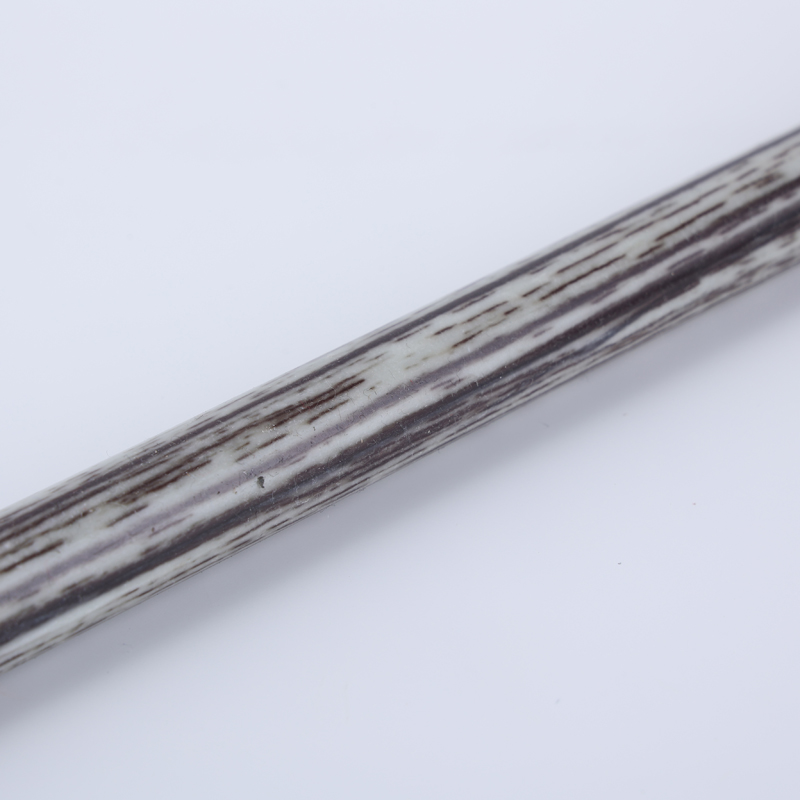
Choosing between domestic and overseas manufacturers presents a difficult balancing act. You must weigh upfront pricing against logistical realities.
Overseas manufacturers frequently offer highly competitive volume pricing. Asian facilities, for instance, excel at massive production runs. However, domestic suppliers provide much faster turnaround times. They also offer easier communication. You must analyze these specific trade-offs carefully. A cheaper bar might cost you more if project delays burn through your budget.
International freight introduces many hidden expenses. You must account for import tariffs and customs broker fees. Furthermore, securing long composite profiles requires specialized packaging. High-length bars snap easily if improperly loaded. You must insist on rigid wooden crating and proper dunnage. Detail the necessity of secure packaging in your contracts. This prevents costly transit damage.
Technical support remains vital. Highlight the importance of finding a responsive partner. They must provide English-fluent engineering support. Your supplier needs to interpret complex structural schematics flawlessly. Translation errors during the CAD phase lead to catastrophic manufacturing mistakes. Direct, clear communication prevents these expensive tooling errors.
You must actively hunt for warning signs before signing any purchase orders. Many procurement failures happen because buyers ignore early red flags.
Warn your team against manufacturers offering generic specifications. A reliable partner provides batch-specific testing data. If a supplier hands you a broadly written TDS, remain skeptical. They might mix different resin batches to save money. You need precise numbers for tensile and flexural metrics. Ambiguity always hides poor quality control.
Custom pultrusion tooling takes significant time to build. Proper resin curing processes also demand patience. You cannot rush the exothermic reaction inside the die. Aggressive timelines usually indicate corner-cutting. Manufacturers might pull the rovings too fast. This creates internal voids and weakens the final profile. Realistic lead times show maturity and technical competence.
Your initial prototype batch must match the final production run exactly. Explain this strict requirement to your supplier immediately. A "bait and switch" in resin quality acts as a critical failure point. Some unscrupulous vendors send pristine epoxy samples. They then switch to cheap polyester for the bulk order. You must test samples from the actual production run to verify consistency.
Do not leave the onboarding process to chance. A structured approach guarantees you get exactly what you specify.
Your Request for Quote must eliminate all guesswork. Broad requests yield inaccurate pricing and mismatched expectations. Outline exact technical details thoroughly.
Specific Dimensions: Define length, width, thickness, and acceptable tolerance limits.
Environmental Exposure Conditions: Specify marine environments, UV levels, or chemical exposures.
Load-Bearing Requirements: Detail the continuous and peak physical loads the component must endure.
Expected Annual Usage (EAU): Provide accurate volume forecasts to negotiate better tooling amortization.
Never fund custom tooling based on a handshake. Advise your team to request a standard sample first. Send this sample for independent third-party lab testing. Verify the resin-to-glass ratio yourself. Once the lab confirms the mechanical properties, you can authorize the custom die creation safely.
Always recommend starting with a lower-volume pilot run. Do this before executing the master purchase agreement. A pilot run tests their packaging methods. It verifies their shipping reliability. Most importantly, it checks actual dimensional tolerances against the agreed-upon Service Level Agreement (SLA). Use this trial to catch minor errors before they become massive liabilities.
Partnering with the right manufacturer represents a major strategic investment. It ensures long-term product integrity and excellent supply chain stability. Procurement and engineering teams must collaborate closely. You should prioritize transparent testing and clear communication over finding the lowest initial bid. Cheap materials often create expensive field failures. A rigorous vetting framework protects your projects and your brand. Audit your current supply chain today. Submit a detailed RFQ to begin testing a newly verified manufacturer. Demand excellence, trace every batch, and secure your structural success.
A: MOQs vary heavily based on tooling. If you require new custom pultrusion dies, expect an MOQ of 1,000 to 3,000 meters. This covers the setup and die-heating costs. Running standard sizes usually requires a much lower MOQ, often around 500 meters, because the factory already owns the heated dies.
A: A fully custom profile typically takes 6 to 8 weeks. Tooling creation consumes the first 3 to 4 weeks. Producing and approving the initial sample takes another week. The full production run and final curing process require the remaining 2 to 3 weeks.
A: You must provide exact width, thickness, and length dimensions. Specify the resin type (e.g., epoxy, vinyl ester) and color preferences. Furthermore, include specific structural load demands, environmental exposure conditions, and necessary compliance standards to ensure accurate pricing.
A: You should request manufacturer Certificates of Analysis (CoA) for every shipment. For ultimate verification, send random samples to an accredited independent laboratory. They will perform destructive testing, such as tensile pulls and flexural bends, to confirm the data exactly matches the specifications.
