
close
Choose Your Site
Global
Social Media


Views: 0 Author: Site Editor Publish Time: 2026-06-30 Origin: Site


Misidentifying a structural tube can lead to catastrophic failure, chemical degradation, or a severely wasted project budget. You might initially assume material selection remains straightforward on the modern job site. However, visual similarities frequently deceive even experienced builders, contractors, and engineers. While fiberglass and standard structural plastics look remarkably similar from a distance, their internal matrices behave completely differently under heavy load, extreme heat, and harsh environmental stress. Common plastics like PVC or ABS serve well in basic, non-critical roles. Yet, accidentally substituting them into demanding, load-bearing environments introduces unacceptable safety risks. Before committing to a specific material for industrial, marine, or custom fabrication projects, you must verify its composition unequivocally. We will guide you through practical visual, tactile, and physical tests to confirm exactly what you hold. Here is the evidence-based framework for reliable Fiberglass Tube Identification and comprehensive project evaluation.
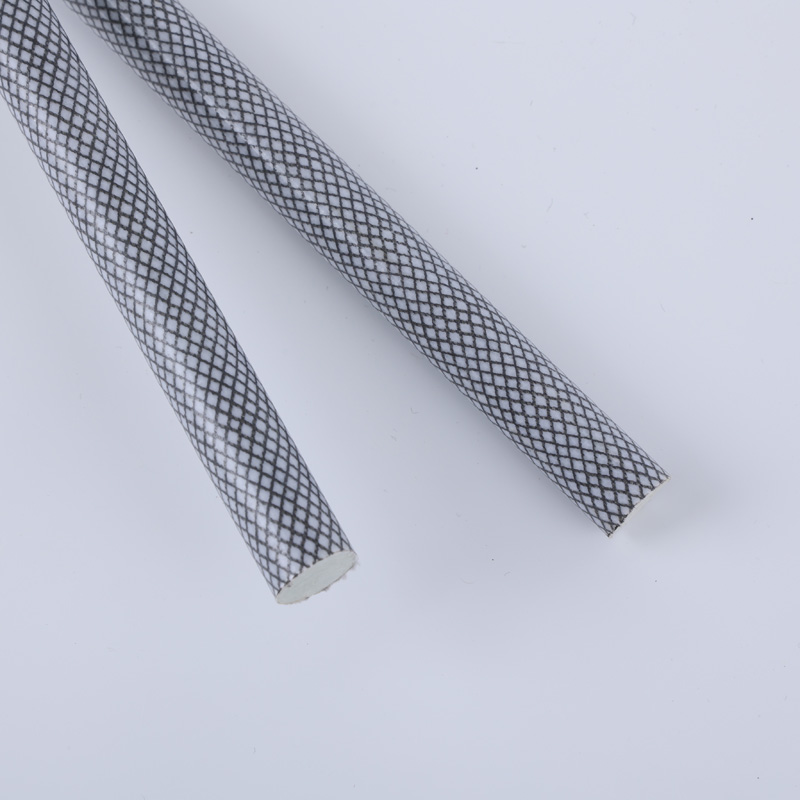
Visual Evidence: Fiberglass tubes typically show an embedded woven or pultruded fiber grain, whereas plastic tubes feature a completely uniform, homogeneous surface.
Physical Response: Under pressure, plastic will bend and deform; fiberglass remains highly rigid until its breaking point.
Thermal Tolerance: Plastic melts and warps under high heat. The resin in fiberglass may char, but the underlying glass structure will not melt.
Application Fit: Choose plastic for low-cost, low-load fluid transfer; specify fiberglass for high strength-to-weight structural applications.
Selecting the wrong material brings severe consequences that extend far beyond initial procurement costs. When you build a critical assembly, the underlying chemistry of your chosen tubing dictates how long that structure survives in the real world.
You must understand the immense risk of using basic plastic in a load-bearing application where engineers specifically required a durable composite. Plastics naturally exhibit a high creep rate. They slowly yield and deform under continuous weight. Over time, a heavily loaded plastic framework inevitably sags, bows, or collapses entirely. Conversely, a high-quality Fiberglass Tube retains its precise structural shape under constant stress. Industrial engineers trust fiberglass for scaffolding, safety handrails, and heavy-duty structural supports because it aggressively resists physical deformation over decades of use.
Plastics expand significantly with ambient temperature changes. When a solid plastic pipe heats up in the direct afternoon sun, it lengthens dramatically. This unpredictable thermal movement potentially warps attached metal assemblies, shatters rigid mounts, or breaks tight mechanical seals. Fiberglass offers exceptionally reliable dimensional stability. The glass matrix locks the resin in place, ensuring it barely expands or contracts. It keeps your precise engineering tolerances intact regardless of sudden weather shifts or extreme seasonal temperature swings.
Long-term environmental degradation quickly destroys unprotected synthetic materials. Untreated plastic becomes extremely brittle under continuous UV light exposure. It chalks, cracks, and eventually shatters from otherwise minor physical impacts. In contrast, fiberglass readily withstands harsh outdoor environments and punishing marine conditions. Manufacturers specifically formulate the outer resin matrix to repel UV radiation damage and actively resist corrosive, aggressive chemicals.
You rarely need an expensive laboratory setup to identify composite materials accurately. Often, your naked eye and a few simple hand tools provide enough immediate clues to make a confident determination on the shop floor.
Look closely at the freshly cut end of the tube. This cross-section immediately reveals the internal manufacturing structure.
Plastic: You will observe a perfectly clean, solid, unified material profile. The cut edge looks exactly like the exterior wall. It is completely homogenous from the outside skin all the way through to the inside diameter.
Fiberglass: Inspect the cut edge under bright light. You will easily see distinct physical layers, slight fraying, or tiny individual glass fibers visibly separated from the surrounding resin matrix. Sometimes, a rough cut leaves microscopic, hair-like glass strands protruding from the raw edge.
Run your bare fingers along the outer wall and hold the material up to a strong light source.
Plastic: It feels incredibly smooth and completely uniform across its entire length. If you scratch it hard with a key, it suffers a deep, continuous gouge. The scratch simply removes the top material layer, revealing more of the exact same plastic underneath.
Fiberglass: It frequently displays a subtle "weave" pattern or linear grain texture just beneath the smooth surface coat. These are known as pultrusion lines or roll-wrap marks. Furthermore, deep scratches often bypass the resin and reveal a chalky white, fibrous structure hiding underneath the outer gel coat.
Grab a solid metal hand tool to evaluate the acoustic properties of the cylinder.
Plastic: Tapping the sidewall produces a dull, flat, dead "thud." The relatively soft, highly pliable molecular structure absorbs the kinetic impact energy almost instantly.
Fiberglass: Tapping it produces a much sharper, highly resonant "clink." This happens because of its extreme stiffness and tightly bound composite matrix. It almost echoes like a dull piece of metallic pipe.
Sometimes superficial visual checks leave room for dangerous doubt, especially if the tubing features a thick, obscuring coat of paint. In these cases, destructive testing provides definitive, undeniable answers.
Apply intense mechanical force to a small sample piece using a heavy bench vise and observe how the material physically behaves under extreme duress.
Plastic Evaluation: Standard plastic proves highly ductile. It will bow significantly under applied weight. If you forcefully bend it far enough, it often stays permanently bent in that new shape. Engineers refer to this common phenomenon as plastic deformation.
Fiberglass Evaluation: Fiberglass remains exceptionally rigid. It will not bow easily under human strength. If pushed mechanically to its absolute breaking limit, it snaps violently or splinters lengthwise (delaminates) rather than bending into a curve. You will usually hear distinct cracking or popping noises right before it fails catastrophically.
Safety Warning: Always perform combustion tests outdoors or in a heavily ventilated industrial area. Wear proper respiratory protection and safety glasses. Burning synthetic polymers releases highly toxic, noxious fumes.
Plastic: Holding a localized heat source, like an industrial heat gun or a lighter flame, causes rapid melting. The material starts bubbling, drooping, and deforming within mere seconds. It often drips heavily like hot candle wax.
Fiberglass: The surface resin layer may scorch, produce black smoke, or severely char. However, the underlying structural glass tube will definitively not melt or lose its cylindrical shape. The encapsulated glass fibers themselves easily withstand extreme temperatures, leaving a rigid, blackened skeleton completely intact behind the flame.
Choosing between these two widely used materials ultimately dictates how your final assembly performs over its intended lifespan. Let us objectively compare their operational realities on the factory floor and out in the field.
You must always compare the mechanical advantage when evaluating components. A composite tube offers raw structural rigidity comparable to standard structural aluminum, but it does so at a mere fraction of the overall weight. It heavily outperforms standard extruded plastics in virtually all load-bearing scenarios. You gain tremendous operational strength without burdening your framework with unnecessary, sluggish mass.
Take careful note of the daily implementation realities required during fabrication. Processing composites demands very different shop floor protocols compared to processing simple polymers.
Standard plastic cuts effortlessly with traditional wood saws, band saws, or basic pipe cutters. You rarely need specialized extraction equipment to handle the benign plastic shavings.
A fiberglass element strictly requires specialized abrasive blades, typically coated with fine diamond grit, to prevent severe splintering along the cut line.
Operators must wear appropriate PPE, including respirators, to protect their lungs against highly hazardous, airborne microscopic glass dust generated during high-speed cutting.
Standard plastic undoubtedly features a lower upfront procurement cost, making it highly attractive for immediate, short-term budgets. Fiberglass requires a measurably higher initial investment at the checkout counter. However, it yields a vastly superior return on investment when deployed in high-stress, deeply corrosive, or exposed outdoor environments. Project managers frequently specify it for long-term RV frameworks, advanced marine outfitting, and permanent industrial scaffolding exactly because it outlasts plastic by decades.
Material Performance Comparison Chart | ||
Performance Metric | Standard Structural Plastic | Fiberglass Composite |
|---|---|---|
Rigidity & Stiffness | Low (Bows and deforms easily) | High (Resists heavy deflection) |
Thermal Expansion | High (Warps rapidly in direct heat) | Minimal (Remains dimensionally stable) |
Machinability | Simple (Uses standard woodworking tools) | Complex (Requires abrasive tools and PPE) |
UV & Chemical Resistance | Poor to Moderate (Requires regular replacement) | Excellent (Withstands harsh weathering) |
Every engineering project carries its own highly unique operational demands. Use these final strategic guidelines to finalize your material shortlisting confidently.
Handling low-pressure fluid transfer or basic, protective wire routing applications.
Operating within climate-controlled indoor environments with perfectly stable ambient temperatures.
Building temporary prototype projects where extreme budget constraints heavily outweigh long-term structural requirements.
Designing weight-sensitive structural frameworks, such as amateur radio antennas, commercial drone frames, and lightweight temporary construction.
Deploying specialized applications requiring radar transparency or strict electrical insulation, since the glass matrix is naturally non-conductive.
Building inside harsh chemical processing plants, heavily corrosive coastal areas, or extreme temperature environments.
Guidelines dictate that you should consult directly with composite manufacturers very early in your design phase. First, verify strict dimensional tolerances to ensure your custom fittings slide on smoothly. Second, discuss specific resin formulations. For instance, advanced epoxy resins handle extreme mechanical stress perfectly, while standard polyester resins offer reliable, general-purpose utility. Finally, clarify the physical production methods used. Pultruded profiles excel immensely in linear pulling strength. Meanwhile, roll-wrapped tubes handle aggressive torsional twisting forces much better during operation.
Differentiating a highly rigid composite material from a standard plastic pipe comes down to closely observing the fiber matrix, testing raw structural rigidity, and aggressively evaluating thermal resistance. Relying on simple visual identification alone remains incredibly risky for critical, load-bearing builds. Always use the definitive flex test or detailed cross-section checks to confirm the material physically before committing to full-scale, expensive fabrication. When human safety and structural integrity are firmly on the line, take proactive action to protect your design. Always source your raw materials exclusively from certified composite suppliers who readily provide transparent, fully verifiable specification sheets.
A: Yes, but it requires specific surface preparation. You must sand the smooth gel coat or outer resin slightly to give the new paint some mechanical grip. Apply a high-quality epoxy or urethane-based primer to ensure proper, lasting adhesion. This directly contrasts with standard plastics, which often require dedicated chemical adhesion promoters to keep the paint from instantly flaking off.
A: Generally, cured fiberglass possesses a higher overall density than standard PVC material. This means it is slightly heavier by sheer physical volume. However, its massive structural strength advantage means you can confidently use much thinner wall dimensions during design, ultimately saving significant overall weight on your completed project.
A: Plastic heavily relies on liquid solvent cement, which creates an aggressive, melting chemical weld between two pieces. Conversely, fiberglass parts must be mechanically fastened with bolts or permanently bonded using high-strength, two-part structural epoxies. Standard plumbing solvents simply will not melt, fuse, or affect a fully cured fiberglass resin matrix.
A: Yes. Unlike cracked plastic components, which generally must be completely thrown away and replaced, minor surface damage on composites allows for highly effective structural repairs. You can efficiently use specialized liquid resin and woven fiberglass patching kits. However, severe, deep structural cracks splitting the tube often warrant full component replacement for absolute safety.
