
close
Choose Your Site
Global
Social Media


Views: 0 Author: Site Editor Publish Time: 2026-06-04 Origin: Site


Unlike metals or standard polymers, Fiberglass Tube Cutting requires mitigating two unique failure points. You constantly face structural delamination, which causes severe fraying or splintering along raw edges. You also must manage hazardous airborne particulate generation. Improper cutting techniques rapidly compromise structural integrity. Poor methods waste expensive pultruded materials and ruin high-value assemblies. Furthermore, ignoring proper dust management easily violates strict occupational safety standards.
This guide provides a definitive framework for evaluating your tooling options. We will show you how to standardize your execution step-by-step. You will learn exactly how to maintain strict safety compliance. Read on to master these methods for commercial, industrial, or high-precision applications.
Tooling rules: Abrasive cutting mechanisms (diamond grit or carbide) strictly outperform toothed blades by grinding through glass fibers rather than tearing them.
Preparation is critical: Applying tightly wrapped masking tape over the cut line is a mandatory step to prevent surface splintering and resin blowout.
Safety compliance: Fiberglass dust is a severe respiratory and dermal hazard; P100 particulate filtration and localized dust extraction are non-negotiable for scale.
Motion control: Rotating the tube into the blade yields higher precision and less tear-out than a single, static straight-through pass.
Understanding material composition forms the foundation of proper fabrication. Every Fiberglass Tube consists of a cured resin matrix and highly directional glass fibers. The resin provides shape and environmental resistance. The glass fibers deliver immense tensile strength. Cutting physically disrupts this unified matrix. When you apply improper force, you risk creating microscopic fractures along the edge.
These micro-fractures remain invisible initially. However, they easily propagate once the part experiences mechanical stress, thermal cycling, or vibration. To prevent catastrophic failure, you must achieve specific success criteria during the cutting phase.
Zero delamination or fraying at the cut edge: The interior and exterior walls must remain perfectly smooth. Any loose fibers indicate a compromised matrix.
Perfect perpendicularity: Achieving an exact 90-degree cut is critical for aerospace components, model rocketry, or load-bearing conduit applications where pieces must sit flush against bulkheads or fittings.
Zero thermal degradation: Cutting generates friction. Excessive friction burns the resin, turning it brown or black. Burnt resin loses its structural properties and compromises joint adhesion.
Failing to meet these criteria carries significant consequences. First, you face wasted material. Pultruded composite tubes represent a significant financial investment, and ruined ends often render the entire piece useless. Second, compromised structural joints threaten the integrity of your final build. If you glue a frayed edge into a coupler, the joint will eventually fail under load. Finally, improper dust management in commercial environments invites severe regulatory fines. Airborne glass particulates pose massive health risks, making strict hazard control mandatory.
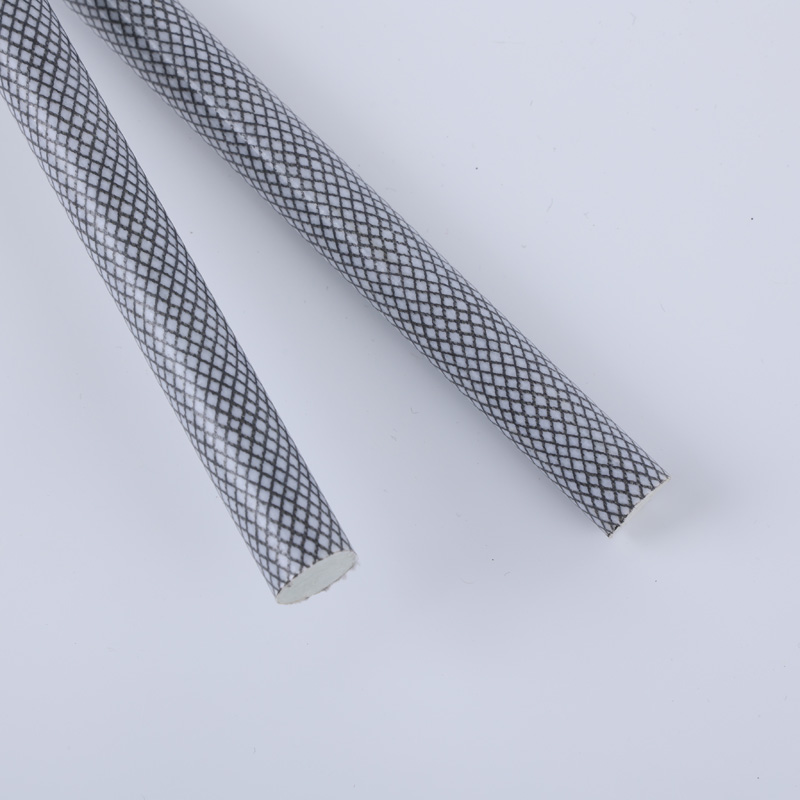
Selecting the right equipment dictates the quality of your finished edge. Because glass fibers destroy standard steel tooling rapidly, you must prioritize abrasive cutting mechanisms over traditional toothed blades. Abrasive tools grind the material away cleanly. Toothed blades snag individual fibers and rip them from the resin bed.
When processing large batches of material, efficiency and consistency matter most.
Band Saws: A commercial band saw operates beautifully for batch processing. However, you must equip it properly. Standard wood or metal blades fail instantly. You require carbide-grit or diamond-coated blades. These abrasive blades chew through the composite without snagging.
Tile/Wet Saws: Many fabricators highly recommend wet saws. The continuous-rim diamond blade delivers exceptionally clean edges. More importantly, the water acts as a dual-purpose agent. It serves as a coolant to prevent resin burn. It also acts as a strict dust-suppression agent, turning hazardous airborne particulates into a manageable, harmless sludge.
Sometimes you need to make one-off cuts, execute field repairs, or build delicate precision instruments.
Rotary Tools (e.g., Dremel): When equipped with a diamond cutoff wheel, a rotary tool excels. It works best for thin-walled tubes, model rocketry, and telescope builds where precision easily exceeds volume requirements. The small blade allows for delicate plunge cuts and tight control.
Hacksaws: Manual cutting remains viable for low-volume or remote field work. You must use a fine-tooth blade. Ensure the blade has a minimum of 32 TPI (Teeth Per Inch). The process feels slower, but the high tooth count minimizes snagging.
Never use the following tools on composite materials.
Standard Pipe Cutters: Plumbers use rotary pipe cutters for copper and PVC. These tools rely on a ratcheting wedge wheel. This inward pressure will instantly crush the resin matrix and shatter the tube.
Wood-cutting blades (Coarse teeth): Blades designed for lumber have deep gullets and aggressive teeth. They will catch the glass fibers, violently yank them outward, and cause severe splintering and delamination.
Tool Category | Recommended Blade / Wheel | Best Application | Dust Hazard Level |
|---|---|---|---|
Wet Tile Saw | Continuous-Rim Diamond | High-volume, thick-walled tubes | Low (Water suppressed) |
Band Saw | Carbide-Grit / Diamond-Coated | Industrial batch processing | High (Requires extraction) |
Rotary Tool | Miniature Diamond Wheel | Precision hobby, thin-walls | High (Requires respirator) |
Hacksaw | 32 TPI Bi-Metal | Field repairs, low-volume | Medium (Slower generation) |
Best Practice: Always let the abrasive grit do the work. Apply light, consistent pressure. Forcing the blade generates excessive heat and damages the matrix.
Common Mistake: Attempting to use a standard abrasive metal-cutting chop saw blade. These blades often generate too much heat for resins, leading to heavy edge burning.
Even the best diamond tools fail if you ignore proper handling procedures. Follow this standard operating procedure to guarantee a flawless finish every single time.
Never skip surface preparation. First, wrap the intended cut circumference tightly with high-quality masking tape or painters tape. The tape acts as a physical barrier. It compresses the outer fibers and prevents the blade from pulling them upward during the cut. Once wrapped securely, measure your desired length. Mark your precise cut line directly onto the tape using a fine-tip marker or a pencil. For thicker tubes, use a wrap-around flexible ruler to ensure your line connects perfectly around the entire circumference.
You must hold the material absolutely rigid during the process. Any vibration chatters the blade and ruins the edge.
Place the tube in a sturdy holding fixture.
Use V-blocks or padded clamps. Soft jaws made of neoprene or dense rubber work perfectly.
Apply just enough pressure to prevent rotation.
Risk Assumption: Over-tightening standard bench vises will crack the wall. The localized crushing force destroys the internal matrix long before the tube visually deforms.
Your cutting technique heavily dictates the final edge quality. Do not force the blade straight through the center of the cylinder. A straight-through plunge pushes the blade through the far wall from the inside out. This invariably causes severe internal blowout and splintering on the back side.
Best Practice: Penetrate the wall thickness just until the blade enters the hollow center. Then, slowly rotate the tube against the blade direction. You want to cut the perimeter continuously. By always cutting from the outside in, you minimize internal tear-out and maintain perfect concentricity.
A fresh cut remains vulnerable until properly sealed.
Remove the masking tape carefully. Pull it parallel to the edge, not away from it.
Lightly chamfer both the inside and outside cut edges using fine-grit sandpaper (220+ grit). Sand exclusively in an inward motion toward the center of the wall. This removes micro-burrs without lifting fibers.
Apply a thin coat of CA (cyanoacrylate) glue or structural epoxy to the raw edge. Use a cotton swab to spread it evenly. This essential step locks the exposed fibers in place. It also prevents future moisture ingress, which can swell and delaminate the composite over time.
Cutting composite materials presents unique physiological hazards. The dust generated does not behave like sawdust. It acts like microscopic glass shards. When airborne, these shards pose severe risks to your body and your facility.
Inhaling glass particulates causes serious respiratory damage. The tiny fibers embed themselves deeply into lung tissue. Standard cloth or surgical masks are entirely insufficient; they cannot filter particulates of this micron size. NIOSH-approved N95 or P100 respirators are mandatory. For sustained cutting operations, a half-face or full-face P100 respirator provides the most reliable protection.
Glass dust causes mechanical dermatitis. When the dust settles on your skin, moving your arms grinds the shards into your pores, causing intense itching and rashes. Always wear long sleeves. Tape your cuffs if necessary. Nitrile gloves protect your hands while maintaining tactile sensitivity. Furthermore, full-seal safety goggles remain critical. Standard safety glasses allow floating dust to drift behind the lenses, risking severe corneal scratches.
Pro Tip: If you get dust on your skin, wash it off using cold water. Cold water keeps your pores closed. Hot water opens your pores, allowing the glass shards to penetrate deeper.
How you handle the environmental fallout depends on your operational scale.
Low volume: If you only need a few cuts, work outdoors. Let the prevailing wind carry the dust away from your face and property.
Commercial/B2B scale: Indoor production environments require strict engineered controls. Implement wet-cutting systems whenever possible. If you must cut dry, you need high-velocity localized HEPA vacuum extraction positioned directly at the cutting source. Standard shop vacuums will simply blow the micro-dust out of their exhaust ports. You must use certified HEPA filtration to meet OSHA (or local equivalent) air quality standards and protect your workforce.
Different industries demand different approaches to fabrication. You must tailor your technique to your specific application.
In heavy industrial environments, you often process thick-walled materials used for electrical conduit or chemical transfer lines. Here, throughput matters just as much as precision. Focus heavily on optimizing feed rates. Automated band saws equipped with abrasive blades handle these thick walls beautifully. Ensure your extraction systems run continuously so you avoid bottlenecking production due to air quality safety stoppages.
High-end fabrication involves exceptionally thin-walled composite cylinders. These structures prioritize extreme lightweight characteristics. Consequently, they suffer from out-of-round deformation easily during the cutting process. You must focus on mitigating this deformation.
Thin-walled tubes require ultra-fine diamond wheels. More importantly, they require rigid internal support. Fabricators often build a custom wooden or plastic mandrel. Slide this tight-fitting mandrel inside the tube directly under the cut line. This internal support prevents the blade pressure from bowing the thin walls inward, ensuring a perfectly circular and perpendicular edge.
Successful fabrication relies entirely on respecting the material's unique physical properties. You must discard traditional woodworking or metalworking habits. Ensure you always use abrasive mechanisms rather than toothed cutting actions. Implement rigorous pre-cut taping protocols to physically bind the surface fibers. Finally, deploy aggressive dust management systems to protect yourself and remain compliant with safety regulations.
Evaluate your production volume before proceeding. If you only need a few one-off cuts for a weekend project, invest in a simple diamond rotary wheel, a roll of good masking tape, and adequate PPE. However, if you manage a production environment, allocate budget toward a dedicated wet-saw system or a commercial dust-extraction bandsaw setup. Investing in the correct infrastructure guarantees regulatory compliance, maximizes material yield, and ensures the structural integrity of every component you produce.
A: No. The ratcheting pressure of a standard pipe cutter will crush and splinter the fiberglass matrix, ruining the tube. The wedge wheel pushes inward, causing catastrophic delamination. Always use a saw or an abrasive wheel to grind away the material safely.
A: A continuous-rim diamond coated blade or a carbide-grit blade provides the cleanest edge. These blades grind rather than tear. If a toothed blade must be used, select the highest TPI (Teeth Per Inch) available, such as 32 TPI, to minimize snagging the fibers.
A: Wrap the cut line tightly with masking tape to compress the fibers. Use a fine abrasive blade and cut slowly without applying excessive downward pressure. Finally, rotate the tube during the cut rather than pushing the blade straight through the center.
A: Yes. The cutting process generates microscopic glass dust that can cause severe respiratory damage, eye injuries, and skin irritation. Proper PPE, including P100 respirators, sealed goggles, and active HEPA dust extraction, are absolutely required during fabrication.
