
close
Choose Your Site
Global
Social Media


Views: 0 Author: Site Editor Publish Time: 2026-06-14 Origin: Site


Project engineers and procurement teams actively seek better structural materials today. You constantly replace traditional steel, aluminum, and timber across harsh environments. Composite materials solve this ongoing engineering challenge effectively. They mitigate aggressive corrosion and drastically reduce lifecycle maintenance needs.
Traditional materials often fail prematurely in the field. Harsh chemical, saline, or high-voltage environments destroy them quickly. This rapid decay causes compounding replacement cycles. It also introduces severe safety risks for on-site personnel and public infrastructure. You can no longer rely on legacy materials for extreme applications.
We wrote this guide to provide a pragmatic, evidence-based evaluation. You will learn exactly where and how to specify these composites across three demanding sectors. We detail performance parameters, compliance standards, and overall operational longevity. Read on to master these modern material solutions.
Lifecycle Economics: While upfront costs may exceed traditional timber or carbon steel, fiberglass flat bars yield a lower total lifecycle cost by eliminating rust-proofing, painting, and premature structural failure.
Sector-Specific Strengths: The material excels in concrete repair (construction), saltwater submersion (marine), and high-voltage isolation (electrical).
Implementation Realities: Successful deployment requires specific fastening protocols and resin selection (Ortho, Iso, or Vinyl Ester) matched strictly to environmental exposure.
You must understand the material baseline first. Manufacturers use a highly specialized pultrusion process. They pull continuous glass rovings through a heated die. This aligns the internal fibers perfectly. They saturate these fibers in advanced thermosetting resin. This specific manufacturing method gives the bars exceptional tensile strength. It provides massive unidirectional load-bearing capacity. You get structural integrity exactly where you need it most.
Let us examine the weight-to-strength ratio closely. We compare quantitative baseline metrics here. It weighs approximately 75% less than standard carbon steel. It also weighs roughly 30% less than structural aluminum. You achieve this massive weight reduction without sacrificing linear strength. This unique characteristic transforms your field installation process. Your crews move material much faster. They require less heavy lifting equipment on the job site.
Material Baseline Comparison Chart | ||||
Material Type | Weight Ratio (vs Steel) | Corrosion Resistance | Linear Tensile Strength | Maintenance Frequency |
|---|---|---|---|---|
Pultruded Composite | ~25% | Excellent | High (Unidirectional) | Zero/Minimal |
Carbon Steel | 100% (Baseline) | Poor (Requires Coating) | High (Isotropic) | High (Repainting/Sealing) |
Marine Aluminum | ~35% | Moderate (Pitting Risk) | Medium (Isotropic) | Moderate |
Consider the lifecycle operational expenditure (OpEx) carefully. We shift the evaluation away from initial procurement price alone. Corrosive environments demand strict zero-maintenance requirements. You eliminate endless repainting cycles entirely. You stop replacing rusted structural components year after year. This delivers incredible long-term operational efficiency.
You must transparently acknowledge material limitations upfront. It is not suitable for every single application. Do not specify it for applications requiring high thermal conductivity. It acts as an aggressive insulator, not a conductor. It also lacks extreme isotropic strength. It holds immense strength lengthwise along the fiber axis. However, perpendicular impacts can cause structural splintering. Always match your structural load path to the fiber direction.
Infrastructure decay plagues modern cities globally. Internal steel rebar corrodes rapidly inside aging structures. The subsequent rust expands and spalls the surrounding concrete. You can address this decay using Fiberglass Flat Bar. Engineers specify it frequently for near-surface mounted (NSM) structural strengthening. Crews cut narrow grooves into aging concrete slabs. They bond the composites into these slots using high-strength epoxy. This method revitalizes failing bridge decks effectively. It completely mitigates the galvanic corrosion cycle. Steel causes this destructive electrochemical reaction continuously. Composites stop it instantly.
Architectural frameworks require incredibly smart material choices. Commercial building facades carry heavy, unpredictable wind loads. We see massive weight reduction using composite cladding supports. They serve beautifully as rigid architectural louvers. You must follow strict industry guidelines during implementation. The ACMA publishes recommended practices specifically for architectural products. Compliance guarantees long-term structural safety. Your modern facades remain structurally sound. They also resist environmental degradation for decades.
Public transit demands highly reliable infrastructure components. We constantly review project feasibility for pedestrian bridge decking supports. Highway retaining wall reinforcements also require robust, weather-resistant materials. You must align your municipal projects with regional standards. State DOTs (Departments of Transportation) strictly mandate non-corrosive materials today. Follow these essential steps for DOT compliance:
Verify the specific load-bearing requirements for pedestrian traffic.
Confirm absolute material resistance to corrosive winter road salts.
Validate structural deflection limits under dynamic loads.
Submit certified ASTM batch testing data for official approval.
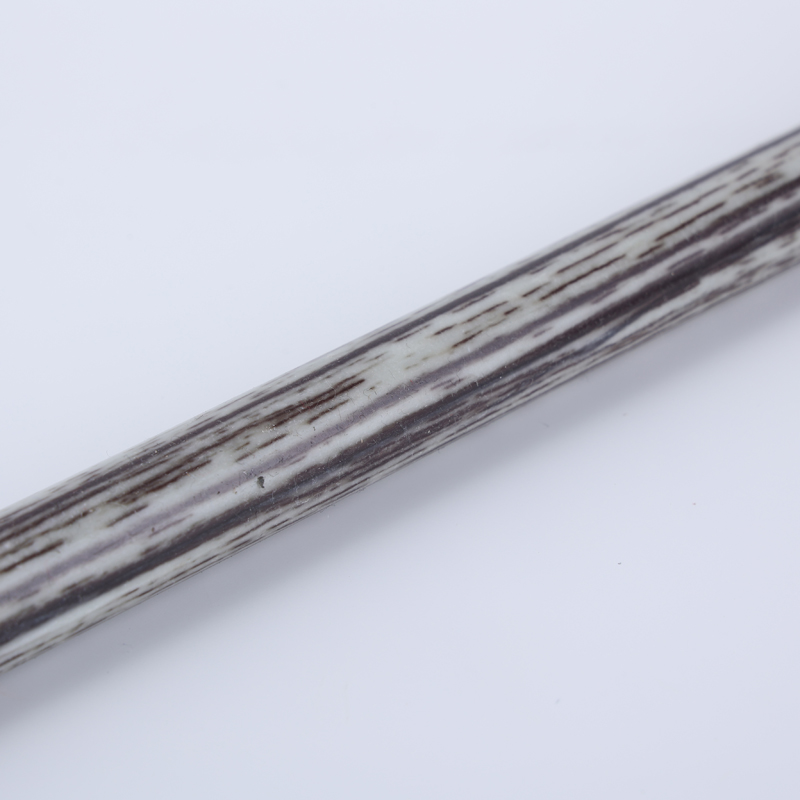
Watercraft construction pushes standard materials to their absolute limit. Boat builders reinforce heavy-duty stringer systems constantly. They build critical bulkhead supports deep inside the hull. Transom reinforcements endure extreme outboard engine torque. Exploring Fiberglass Flat Bar Industry Applications reveals major marine advantages. Pultruded composites resist dangerous osmotic blistering entirely. Salt-induced degradation destroys marine-grade plywood very quickly. Aluminum suffers from severe galvanic pitting in saltwater environments. Composites ignore these aquatic threats completely.
Coastal infrastructure faces similar destructive environmental forces. Splash zones destroy chemically treated lumber rapidly. Tidal immersion areas dissolve galvanized steel brackets over time. You must replace these failing materials permanently. Docks, piers, and seawalls demand better marine engineering. Environmental safety plays a massive role in modern coastal development. Pultruded bars feature completely non-leaching chemical properties. Treated lumber releases toxic preservative chemicals into marine ecosystems. Our composite alternatives protect the fragile coastal environment flawlessly.
High-voltage switchgear demands absolute electrical isolation. Transformer supports cannot risk deadly electrical shorting. You leverage inherent dielectric strength effectively here. This material eliminates complex grounding requirements entirely. Your engineering team saves countless installation hours. Use them safely as high-capacity busbar supports. They function perfectly as rigid insulating spacers. Standoff insulators rely heavily on this non-conductive nature. They prevent dangerous arc flashes in high-power industrial environments.
EMI and RFI transparency matters immensely today. Metal interference ruins sensitive telecommunications equipment operations. Radar facilities cannot tolerate physical signal blocking. 5G enclosures demand invisible structural supports everywhere. Composites let radio waves pass through completely unhindered. They protect the delicate equipment from wind loads. They achieve this without degrading the transmission signal.
Chemical plant safety requires specialized industrial engineering. Processing facilities expose structures to highly corrosive agents daily. Industrial acids and alkalis destroy traditional metals rapidly. You must specify Vinyl Ester resin here explicitly. It provides unparalleled resistance to specific corrosive agents. Extreme chemical exposure demands this premium resin upgrade. It ensures worker safety and prevents catastrophic structural failures.
You need a reliable resin selection framework for procurement. Selecting the wrong resin guarantees structural failure. Follow this standard industry breakdown:
Orthophthalic (Ortho): This is your baseline standard. Use it for general construction environments. It handles basic atmospheric exposure perfectly.
Isophthalic (Iso): This provides elevated corrosion resistance. We specify this for standard marine use. It survives splash zones and moderate chemical exposure.
Vinyl Ester: This delivers premium chemical resistance. It handles severe industrial applications seamlessly. It survives high-temperature corrosive fluid environments.
Installation and machining realities require careful attention. You must upgrade your field tooling requirements immediately. Diamond-coated blades are an absolute necessity. Standard steel blades dull almost immediately. Always use carbide drill bits for precision holes. Dust mitigation ensures strict OSHA compliance on-site. You must manage fine fiberglass particulates carefully. Use wet saws or industrial HEPA vacuums. Protect your workforce from inhalation hazards.
Fastening protocols require specific mechanical techniques. You must avoid over-torquing bolts. We highly prefer structural adhesive bonding. You combine this bonding with mechanical fasteners like stainless rivets. Never use traditional threaded tapping methods. The internal composite threads will shear off under heavy loads. Always use through-bolting to distribute the load evenly.
Shortlisting your supplier takes serious diligence. Do not purchase generic composites blindly. Demand proper verification of ASTM testing data upfront. Check the specific tensile strength and flexural modulus. Review the water absorption rates carefully. Evaluate their manufacturing batch consistency over time. Ask about realistic production lead times. Ensure they offer custom pultrusion capabilities. Good suppliers manufacture custom radii for specialized structural projects.
Procurement Verification Checklist | ||
Verification Category | Specific Metric to Review | Required Documentation |
|---|---|---|
Mechanical Properties | Tensile Strength & Modulus | ASTM D638 / ASTM D790 Data Sheets |
Environmental Resistance | Water Absorption Rate | ASTM D570 Certification |
Manufacturing Capability | Custom Resin Formulations | Manufacturer TDS (Technical Data Sheet) |
Fiberglass flat bar applications offer decisive advantages across demanding sectors. They dominate the construction, marine, and electrical industries today. They win whenever lifecycle durability, drastic weight reduction, and extreme environmental resistance matter most. Traditional materials simply cannot compete with this operational longevity. Proceed with your implementation strategy using these actionable next steps:
Cross-reference your exact structural load requirements with manufacturer technical data sheets (TDS).
Prioritize the correct resin formulation (Ortho, Iso, or Vinyl Ester) over physical dimensions alone.
Request physical application-specific resin samples for on-site environmental testing.
Verify your mechanical fastening protocols strictly prohibit direct material threading.
A: It provides superior unidirectional strength along the fiber axis. However, it possesses lower isotropic strength than steel. Steel handles loads equally well in all directions. Composites handle loads primarily lengthwise. They also exhibit higher deflection rates under extreme weight. You must account for this flexibility during the structural design phase.
A: No, you cannot reshape them on-site. Manufacturers use a thermoset pultrusion process. The heat chemically cures the resin permanently. You cannot melt or bend it after curing. If your project requires curved profiles, the manufacturer must produce custom radii during the initial pultrusion process.
A: Outdoor applications face constant solar radiation. Unprotected bars will experience fiber blooming eventually. Manufacturers prevent this using synthetic surfacing veils. They also apply UV-inhibitive polyurethane coatings. These protective layers block radiation. They ensure the structural core remains intact and visually appealing for decades in harsh sunlight.
A: You should always combine structural adhesives with mechanical fasteners. Apply a high-strength epoxy to the joint. Secure it using stainless steel through-bolting. Never tap or thread the composite material directly. The structural fibers will shear under tension. Through-bolting distributes the load safely across the entire joint.
