
close
Choose Your Site
Global
Social Media


Views: 0 Author: Site Editor Publish Time: 2026-07-09 Origin: Site


Traditional plant supports chronically fail in high-moisture and commercial agricultural environments. Wood rots quickly, bamboo snaps unexpectedly, and steel rusts over time. These failures cause significant headaches for commercial growers and home gardeners alike. You need better, more resilient materials to keep valuable crops upright and secure.
You might wonder if advanced composite materials offer a reliable solution for agricultural infrastructure. The short answer is an absolute yes. Using fibreglass hollow tubes proves highly effective for crop management. They offer a remarkably superior strength-to-weight ratio compared to solid rebar or conventional wooden options.
However, ensuring long-term structural integrity requires sourcing the correct material grade. You must carefully evaluate UV resistance and wall thickness to avoid frustrating implementation failures. In this guide, you will discover exactly why commercial operators are making the transition. We will explore essential material criteria, safe handling practices, and scalability strategies for your next agricultural project.
High Durability: Fibreglass hollow tubes are impervious to rot, rust, and chemical degradation, outlasting wood and metal in soil and hydroponic setups.
Optimal Flexibility: The hollow structure allows for engineered wind-sway, promoting thicker plant stem growth without snapping under load.
Handling Caveats: Uncoated or cut fibreglass requires specific safety protocols to prevent micro-splinters during installation.
Cost Efficiency: Higher upfront material costs are offset by multi-season reusability and reduced replacement labor.
The agricultural industry is actively moving away from disposable materials. Replacing bamboo or wood annually carries massive hidden expenses. You must factor in the labor required to remove broken stakes at the end of each season. You also face severe crop losses when a weak wooden stake collapses under the weight of heavy fruit. Furthermore, chemically treated wood often leaches harmful heavy metals into the surrounding soil. This contamination threatens organic certifications and compromises delicate root zones.
Hollow composite profiles solve these exact problems through basic physics. A tubular structure provides exceptional bending rigidity. It performs similarly to a solid rod but weighs significantly less. This dramatic weight reduction lowers your shipping expenses. It also drastically reduces physical fatigue for farm workers during large-scale field deployments. Carrying fifty hollow stakes across a muddy field is effortless compared to dragging solid steel rebar.
Environmental compatibility acts as another major driver for this transition. Fully cured composite resins are chemically inert. They do not interact with soil microbiology or hydroponic nutrient solutions. You can safely place them directly into sensitive root zones. They will never leach toxins or alter the pH of your growing medium. This makes them perfectly suited for strict organic farming environments and controlled indoor agriculture.
Choosing between hollow and solid composite profiles requires understanding your specific structural needs. Weight and logistics play a massive role in large operations. Compare the weight per linear foot between the two options. Hollow tubes are much easier to transport on pallets. Farm workers can maneuver them swiftly during high-density field deployments. Less weight directly translates to faster installation times and lower labor overhead.
Flexibility under load represents a critical advantage for plant health. Solid profiles are incredibly rigid. When heavy winds hit an orchard, solid stakes transfer all that kinetic energy directly to the plant's roots. This often causes severe root shock. Conversely, hollow profiles absorb kinetic energy. They allow engineered wind-sway. This gentle movement encourages plants to grow thicker, stronger stems without snapping under sudden pressure.
Cost dynamics also strongly favor the tubular design. Manufacturers use less raw resin and glass roving to produce a hollow profile. This creates a highly cost-effective middle ground. They cost slightly more than cheap bamboo but remain significantly cheaper than heavy solid composite rods. You achieve professional-grade strength without depleting your infrastructure budget.
Application matching ensures you select the right tool for the job. Solid rods are best reserved for extreme heavy-duty structural anchoring or dense tree-straightening tasks. Meanwhile, hollow garden fiberglass stakes are ideal for vertical plant growth, protective tree tubes, and standard agricultural trellising setups.
Comparison Metric | Solid Composite Rods | Hollow Composite Tubes |
|---|---|---|
Weight per Foot | High (Heavy and dense) | Low (Lightweight and easy to carry) |
Flexibility | Very rigid, minimal sway | Engineered flexibility, absorbs wind stress |
Material Efficiency | Uses maximum raw materials | Uses less raw material per stake |
Best Application | Heavy tree anchoring, load-bearing frames | Vine trellising, tomato supports, sapling tubes |
Root Shock Risk | Higher (transfers wind energy to roots) | Lower (dissipates energy through tube flexing) |
You cannot simply buy the cheapest composite tubes available and expect a decade of performance. Evaluating specific manufacturing criteria is vital. UV resistance stands as the most critical specification. You must demand UV-coated or specially formulated resin from your supplier. Unprotected composites degrade rapidly under intense summer sun. The resin breaks down in a process called "blooming." This exposes raw glass fibers to the air. It ruins the structural integrity and makes the stakes dangerous to touch.
Wall thickness determines the absolute strength of the tube. You must understand the Outer Diameter (OD) and Inner Diameter (ID) ratio. Heavy tomato vines laden with fruit require a thicker wall to prevent buckling. Conversely, lightweight pepper plants or young saplings only need thin-walled tubes. Discuss your specific crop weight loads with the manufacturer to select the optimal OD/ID ratio.
Surface texture significantly impacts daily usability. Smooth surfaces look sleek but often cause problems in the field. Heavy vines slide down smooth stakes during rainstorms. We highly recommend using ribbed or textured plant support sticks instead. A ribbed finish provides excellent friction. It grips plastic tie-tapes securely and prevents heavy branches from slipping downward.
End caps are small but essential accessories. Never leave the top of a hollow tube open to the elements. Rainwater easily enters the hollow core. When winter temperatures drop, this trapped water freezes and expands. This internal pressure shatters the tube from the inside out. Open tubes also invite wasps and solitary bees to build nests inside your stakes. Simple plastic end caps prevent both of these frustrating issues entirely.
Working with composite materials requires specific safety protocols. You must candidly address the splinter risk before deploying these materials on your farm. Low-quality or degraded composites can shed micro-splinters. These tiny shards cause severe skin irritation. We strongly mandate the use of heavy-duty, nitrile-coated gloves during bulk installation. Never allow workers to handle unverified or freshly cut composite poles with bare hands.
Cutting and sizing your own stakes at the farm requires strict safety-first guidelines. Modifying the lengths is entirely possible, but you must use the correct tools to prevent fraying.
Secure the tube firmly in a padded vice to prevent rolling.
Put on a well-fitted N95 mask and wrap-around safety goggles. Composite dust is hazardous to inhale.
Cut the material using a fine-tooth hacksaw or a high-speed diamond blade. Never use dull wood saws.
Gently sand the freshly cut edge to remove any frayed glass strands.
Seal the exposed cut end using a quick-drying epoxy resin to lock the fibers in place permanently.
Soil penetration techniques also matter greatly. Do not treat composite poles like solid steel stakes. Striking the flat top edge with a heavy metal sledgehammer will instantly crush and splinter the material. Instead, request pre-cut angled tips from your manufacturer for easier insertion. If pushing them into hard clay, use a heavy rubber mallet to distribute the impact force. Better yet, drive a pilot hole into the ground first using a steel spike. This prevents placing unnecessary vertical stress on the composite tube.
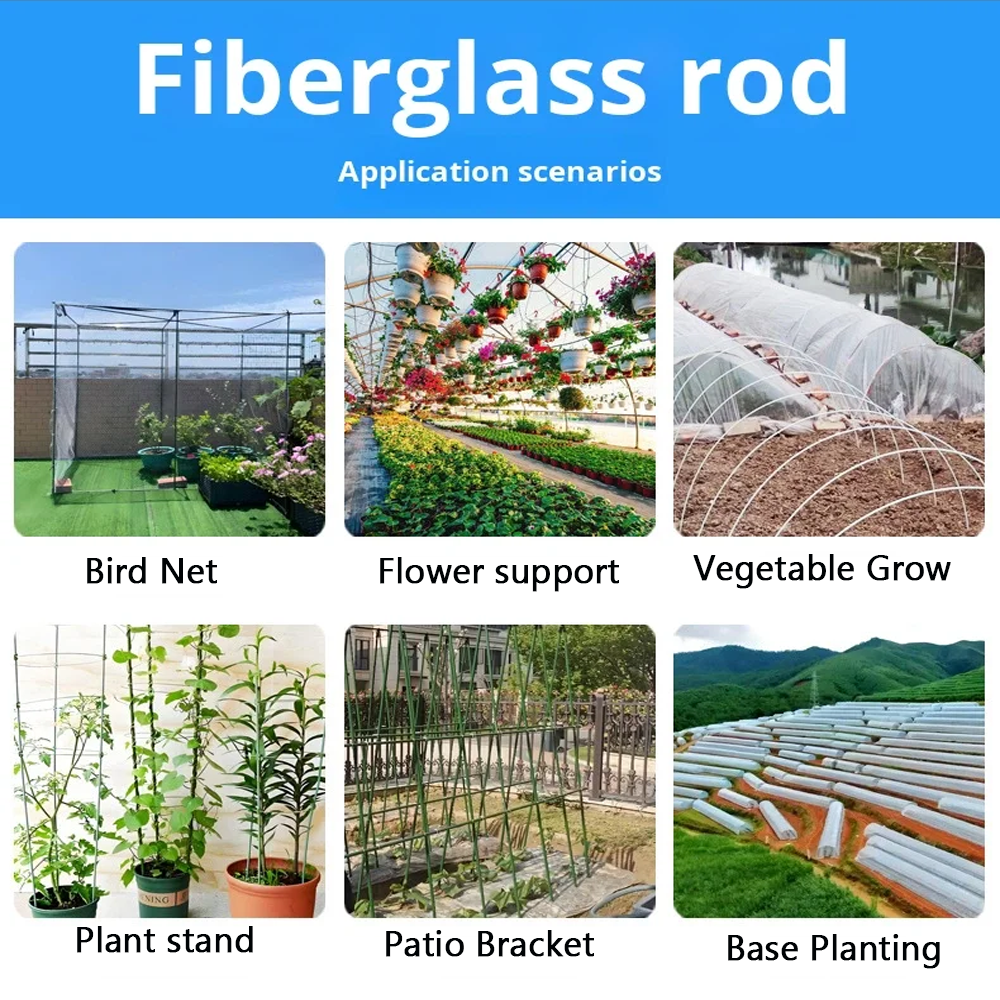
Composite supports scale perfectly across every level of agriculture. Home gardeners and greenhouse hobbyists benefit immensely from shorter lengths. Using four to six-foot tubes works beautifully for indeterminate tomatoes, bell peppers, and heavy-fruiting cucumbers. They provide a clean, uniform aesthetic in a backyard garden. Because they do not rot in moist greenhouse soil, you can reuse them seamlessly for a decade.
Commercial forestry and habitat restoration projects utilize these materials differently. Sapling protection is a massive industry. Hollow stakes integrate flawlessly with protective plastic tree tubes. When restoring habitats, you must defend young saplings against harsh winds and aggressive animal grazing. The hollow stakes provide a sturdy, flexible backbone. They keep the protective plastic shelters anchored firmly to the ground during violent winter storms.
High-density commercial farming relies on strict standardization. Scalability on a massive acreage requires uniformity. Standardized lengths allow farm managers to utilize automated stake-driving machinery. This dramatically speeds up field preparation before planting season. Furthermore, hollow tubes are completely uniform in shape. They stack perfectly onto pallets, making long-term winter storage incredibly efficient compared to warped wooden branches or bent bamboo poles.
Navigating the composite manufacturing market can feel overwhelming. You need a reliable framework to evaluate potential suppliers before placing a bulk order. Use the following criteria to ensure you receive professional-grade agricultural materials.
Material Certifications: Always ask suppliers for detailed resin documentation. Clarify if they use polyester, vinylester, or epoxy resins. Demand documented laboratory results proving their UV inhibitors actually work under prolonged sun exposure.
Customization Capabilities: Look for a manufacturer who acts as a partner, not just a vendor. Can they pre-cut the tubes to your exact lengths? Do they offer chamfered (pointed) ends for easy soil driving? Can they apply a custom ribbed texture to the surface?
Sample Testing: Never order a full shipping container blindly. Always recommend ordering a small trial batch first. Test their flexibility by bending them. Check the wall rigidity. Leave a few in direct sunlight for a month to evaluate the coating quality.
Freight Considerations: Long lengths drastically alter shipping logistics. Factor in Less Than Truckload (LTL) shipping constraints. Any rigid tube exceeding eight feet in length often triggers expensive oversized freight charges. Plan your required lengths carefully to optimize delivery costs.
The agricultural sector is rapidly evolving, and your infrastructure materials must keep pace. We have clearly seen how traditional wood and metal fail under continuous environmental stress. Fibreglass hollow tubes represent a highly viable, superior upgrade for reliable plant support. They deliver an unbeatable combination of lightweight handling, flexible strength, and chemical inertness. However, this success relies entirely on specifying proper UV resistance and adequate wall thickness during the purchasing phase.
Your next step is straightforward. Take time to audit your current annual stake replacement expenses. Calculate the labor hours spent removing rotten wood and replacing snapped bamboo. Once you see the hidden financial drain, reach out to a qualified composite manufacturer. Request a detailed specification sheet and a physical sample. By upgrading your support systems now, you secure stronger yields and smoother operations for countless growing seasons to come.
A: Yes, fully cured fibreglass is chemically inert and does not leach toxins into the soil, unlike chemically treated wood or rusting metals.
A: With proper UV-resistant coatings, they can easily last 10–25+ years in outdoor agricultural environments.
A: Yes, but it requires appropriate safety gear (gloves, mask, eye protection) and a fine-toothed blade to prevent the material from splintering or fraying.
